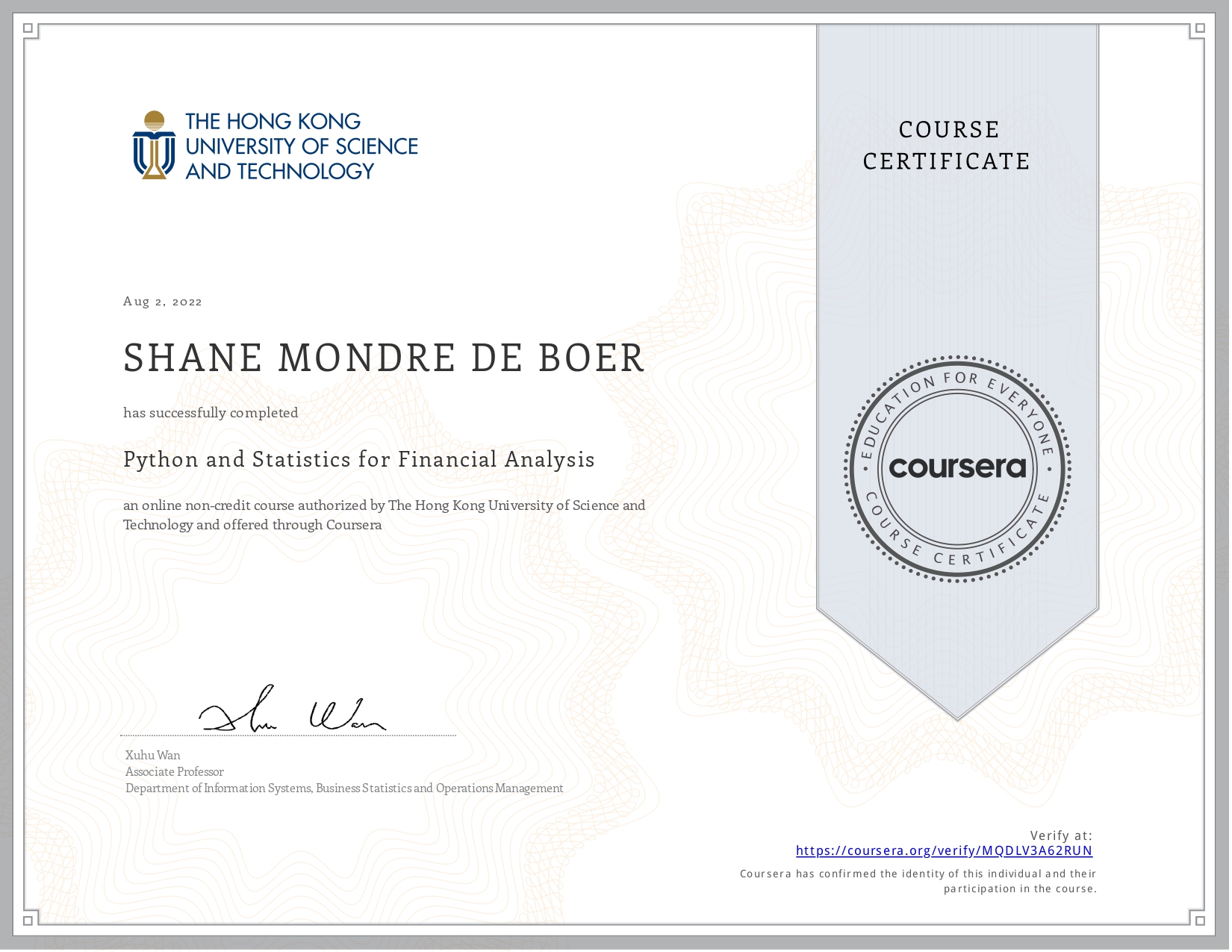
Python is now becoming the number 1 programming language for data science. Due to python’s simplicity and high readability, it is gaining its importance in the financial industry. The course combines both python coding and statistical concepts and applies into analysing financial data, such as stock data. By the end of the course, you can achieve the following using python: - Import, pre-process, save and visualize financial data into pandas Data frame - Manipulate the existing financial data by generating new variables using multiple columns - Recall and apply the important statistical concepts into financial contexts - Build a trading model using multiple linear regression model - Evaluate the performance of the trading model using different investment indicators Jupyter Notebook environment is configured in the course platform for practicing python coding without installing any client applications.
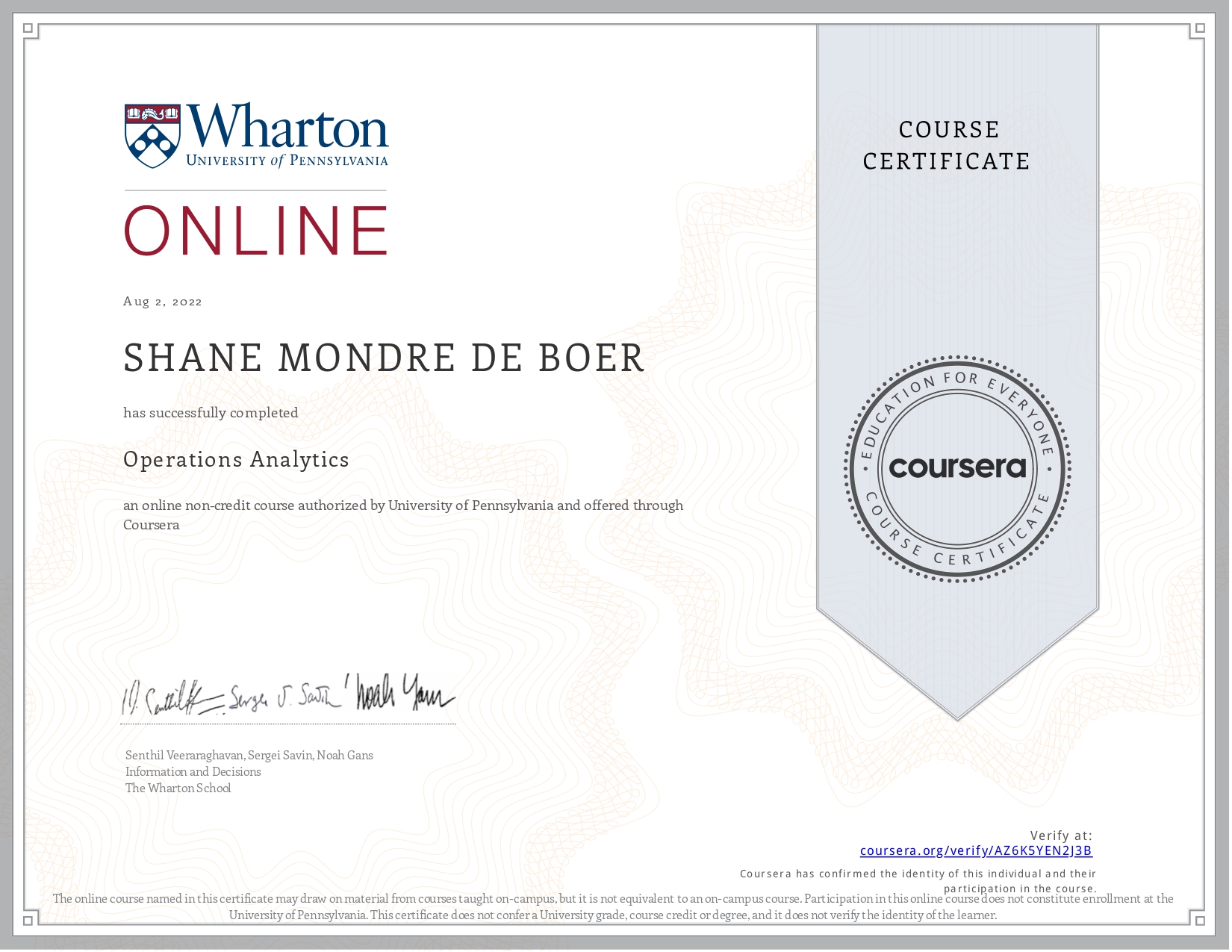
This course is designed to impact the way you think about transforming data into better decisions. Recent extraordinary improvements in data-collecting technologies have changed the way firms make informed and effective business decisions. The course on operations analytics, taught by three of Wharton’s leading experts, focuses on how the data can be used to profitably match supply with demand in various business settings. In this course, you will learn how to model future demand uncertainties, how to predict the outcomes of competing policy choices and how to choose the best course of action in the face of risk. The course will introduce frameworks and ideas that provide insights into a spectrum of real-world business challenges, will teach you methods and software available for tackling these challenges quantitatively as well as the issues involved in gathering the relevant data.
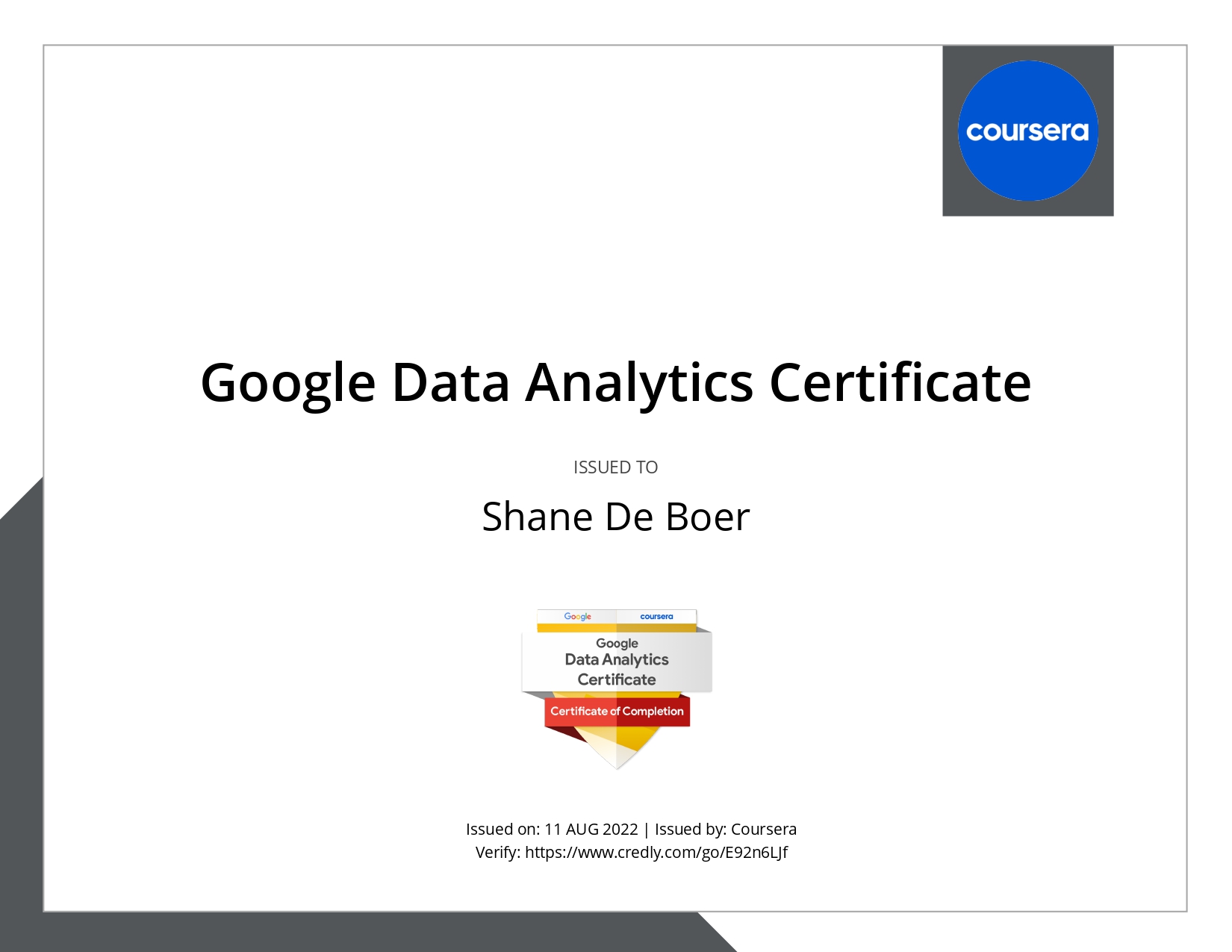
Prepare for a new career in the high-growth field of data analytics, no experience or degree required. Get professional training designed by Google and have the opportunity to connect with top employersData analytics is the collection, transformation, and organization of data in order to draw conclusions, make predictions, and drive informed decision making.
Over 8 courses, gain in-demand skills that prepare you for an entry-level job. You’ll learn from Google employees whose foundations in data analytics served as launchpads for their own careers.
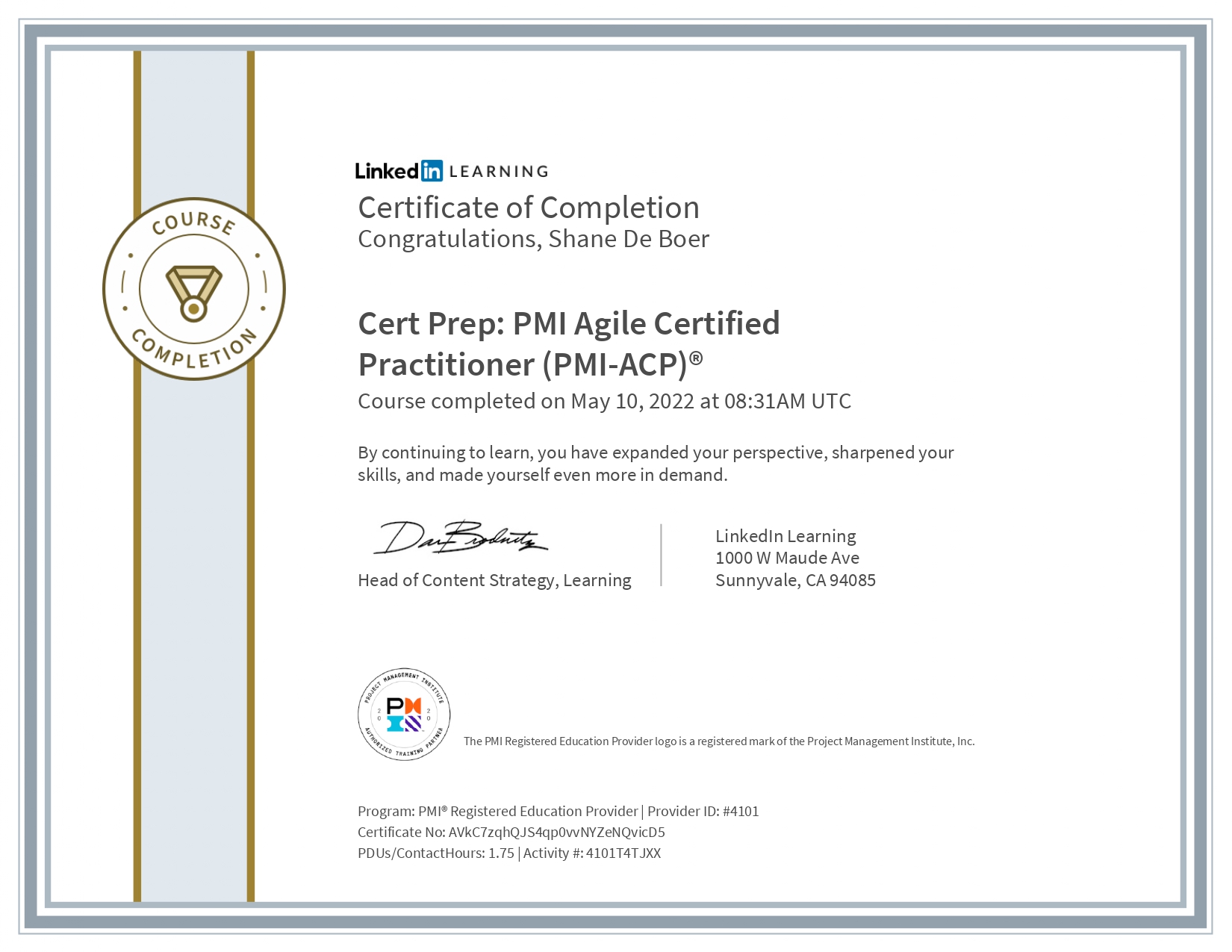
Project managers play a key role in leading, planning and implementing critical projects to help their organizations succeed. In this course, you’ll discover foundational project management terminology and gain a deeper understanding of the role and responsibilities of a project manager. We’ll also introduce you to the kinds of jobs you might pursue after completing this program. Throughout the program, you’ll learn from current Google project managers, who can provide you with a multi-dimensional educational experience that will help you build your skills for on-the-job application.
This course will show you how to set a project up for success in the first phase of the project life cycle: the project initiation phase. In exploring the key components of this phase, you’ll learn how to define and manage project goals, deliverables, scope, and success criteria. You’ll discover how to use tools and templates like stakeholder analysis grids and project charters to help you set project expectations and communicate roles and responsibilities. Current Google project managers will continue to instruct and provide you with hands-on approaches for accomplishing these tasks while showing you the best project management tools and resources for the job at hand.
Learners who complete this program should be equipped to apply for introductory-level jobs as project managers.
This course will explore how to map out a project in the second phase of the project life cycle: the project planning phase. You will examine the key components of a project plan, how to make accurate time estimates, and how to set milestones. Next, you will learn how to build and manage a budget and how the procurement processes work. Then, you will discover tools that can help you identify and manage different types of risk and how to use a risk management plan to communicate and resolve risks. Finally, you will explore how to draft and manage a communication plan and how to organize project documentation. Current Google project managers will continue to instruct and provide you with hands-on approaches for accomplishing these tasks while showing you the best project management tools and resources for the job at hand.
Learners who complete this program should be equipped to apply for introductory-level jobs as project managers. No previous experience is necessary.